
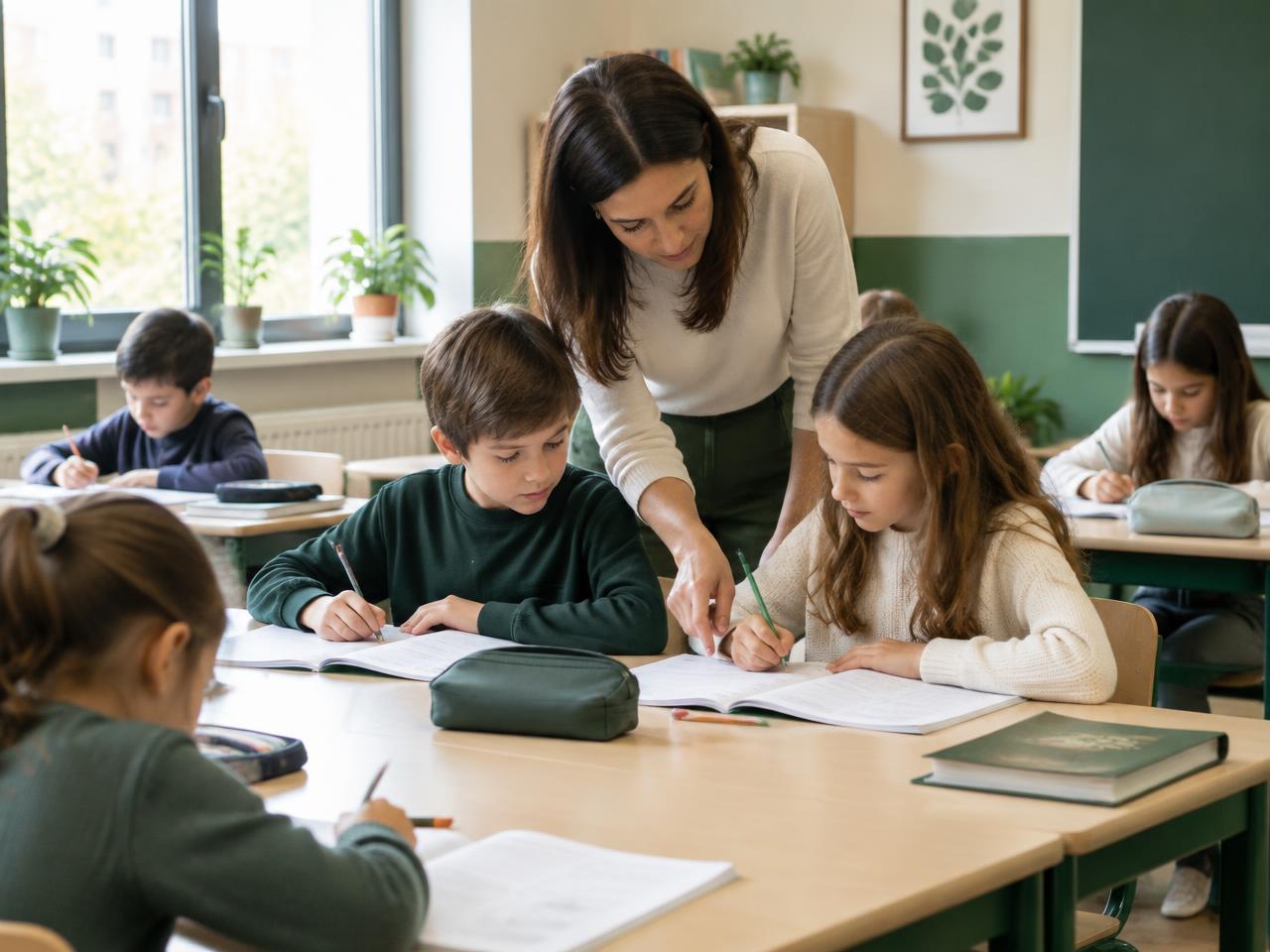
A child does not adopt work habits simply by occasionally being told to do homework. They arise from repetition, a clear schedule, and the feeling that every obligation has its own time. That is why all-day instruction is not just a longer stay at school. It is an organized system in which knowledge, upbringing, rest, nutrition, and physical activity are joined into one responsible daily routine.
For parents who want the school to be a reliable ally of the family, the question is not only how many hours the child spends at the institution. More important is how those hours are organized, who looks after the child during the day, and whether the schedule is backed by clear educational and disciplinary standards.
All-day instruction is not extended after-school care
Extended after-school care is often seen as a solution for the time between the end of classes and the parents' return from work. Such an arrangement can have practical value, but on its own it says nothing about the quality of the day the child spends at school. If lessons, meals, homework, play, and rest are disconnected, the child remains away from home for a long time, and in the evening the parent still takes on the largest share of the school obligations.
All-day instruction starts from a different principle. The school day is a whole with its own rhythm, rules, and goals. Lessons take place when the child is rested and focused. Independent work is accompanied by expert support, but without taking over the student's obligations. Meals and rest are not interruptions to be "filled in," but an integral part of caring for health, concentration, and behavior.
Such a system does not require the child to work without a break. On the contrary, a good schedule protects the child from fatigue because it distinguishes time for effort from time for recovery. Order is not pressure. Order is predictability that allows the child to know what is expected of them and to gradually take on responsibility for their obligations.
What a school day with clear order looks like
A structured day begins with a calm start to school obligations and lessons based on the national curriculum. In small classes the teacher can more carefully monitor understanding of the material, attitude toward work, and each student's progress. A child who has mastered a lesson should receive additional encouragement, while a child who has fallen behind should receive an explanation in time, before the difficulty turns into insecurity.
After lesson time come a meal, rest, and organized activities suited to the age group. A child is not a machine for completing tasks. They need movement, conversation, play, and a change of pace. However, rest too requires an educational framework: table manners, how one treats others, care for shared space, and the ability to respect the rules of the community.
Time for independent work has a special place. The student then learns to read a task through to the end, prepare materials, start without delay, and check completed work. The teacher is not there to dictate every solution to the child, but to teach them the working process. That distinction is crucial. Help that develops independence strengthens character, while help that constantly replaces effort creates dependency.
Physical activities, workshops, project work, themed days, and open classes can enrich the day when they have educational meaning. Not every novelty is valuable in itself. An activity should develop knowledge, expression, cooperation, orderliness, and responsibility toward the task. School should not aim for constant entertainment, but for the joy that arises when a child sees the result of serious work.
Knowledge needs time, but also boundaries
One of the greatest advantages of an organized school day is the possibility for learning to be completed where it belongs - at school, with appropriate conditions and professional supervision. This does not mean the family has no role in education. The family remains the primary space for upbringing, conversation, reading, and personal example. But evening hours should not be a time of exhausting negotiations over notebooks, forgotten assignments, and a parent's attempt to make up for what was not organized during the day.
When a child completes most school obligations within a clearly set framework, more room remains at home for family conversation, a shared meal, a book, a walk, and calmer sleep. Such a change is not small. It affects the child's mood, relationships at home, and the parents' ability to be parents rather than evening supervisors of school assignments.
Still, the system makes sense only if the demands are age-appropriate. A first-grader cannot have the same degree of independence as an upper-grade student. A younger child needs more frequent reminders, clearer instructions, and more guided exercises. An older student should gradually be given greater responsibility: planning, note-taking, preparing for assessments, and understanding the consequences of an unfulfilled obligation.
Safety and nutrition are part of education
Parents rightly ask who is with their child during the day, what the child eats, when they rest, and how the school reacts when a difficulty arises. Safety is not an extra convenience but a basic condition of trust. A child can learn freely only when they know they are in an organized, supervised, and dignified environment.
Four daily meals, carefully fitted into the rhythm of work and rest, are not merely an organizational convenience for the family. Regular, quality nutrition affects attention, energy, and general health. At the same time, a shared meal is an educational opportunity. The child learns to wait their turn, address others politely, take care of themselves, and not waste what they have.
It is important for the school and parents to exchange information openly and in a timely manner. A change in concentration, attitude toward peers, appetite, or mood is often a signal that should be examined without dramatizing, but also without delay. Good cooperation does not mean that boundaries are lowered as soon as dissatisfaction appears. It means that the adults talk responsibly and present a united front to the child.
The mother tongue as a foundation of thought
The all-day educational system gains its full meaning when it is based on the language, culture, and values the child understands as their own. The Serbian language, the Cyrillic script, literature, history, and geography are not decorations of the school program. They build the ability to think, speak, and belong. A child who can clearly say what they think, understand a text, and respect cultural heritage has a firmer foundation for contemporary knowledge as well.
Tradition in this sense does not mean closing oneself off to new knowledge. It means that the new is adopted with measure and judgment. Technology, foreign languages, and modern methods have their place in education, but they cannot replace fundamental literacy, discipline, respect for teachers, and the value of effort invested.
At the Private Primary School "Mihajlo Pupin," the all-day organization of work is designed precisely as a way of connecting the national curriculum, small classes, individual monitoring, and a clear educational framework. The goal is not to fill the child's day, but to guide their day meaningfully.
What a parent should assess before choosing a school
When choosing an all-day school, a parent should look beyond attractive premises and an interesting activity schedule. It is necessary to ask how student progress is monitored, when homework is done, who looks after the child during breaks, how meals are organized, and how the school communicates with the family when a problem arises.
It is also worth paying attention to the school's approach to discipline. Clear rules do not constrain a child growing up in a healthy environment. They give the child the security of knowing the boundaries, understanding the consequences of their actions, and respecting the rights of others. Discipline without respect becomes harshness, but warmth without boundaries does not prepare a child for life. A school that takes upbringing seriously maintains a balance between demands and support.
The best choice is not necessarily the one that promises the most content, but the one that can ensure consistency every day. Children need adults who believe in their potential but do not relieve them of the effort needed for that potential to become knowledge, habit, and virtue.
When the school day has order, the child gradually learns the most important lesson: obligations are not postponed until they become a burden, but are fulfilled conscientiously, in their own time. From that habit grow both knowledge and character, and the family gains a calmer space to be what it should be - a solid support for the child.