
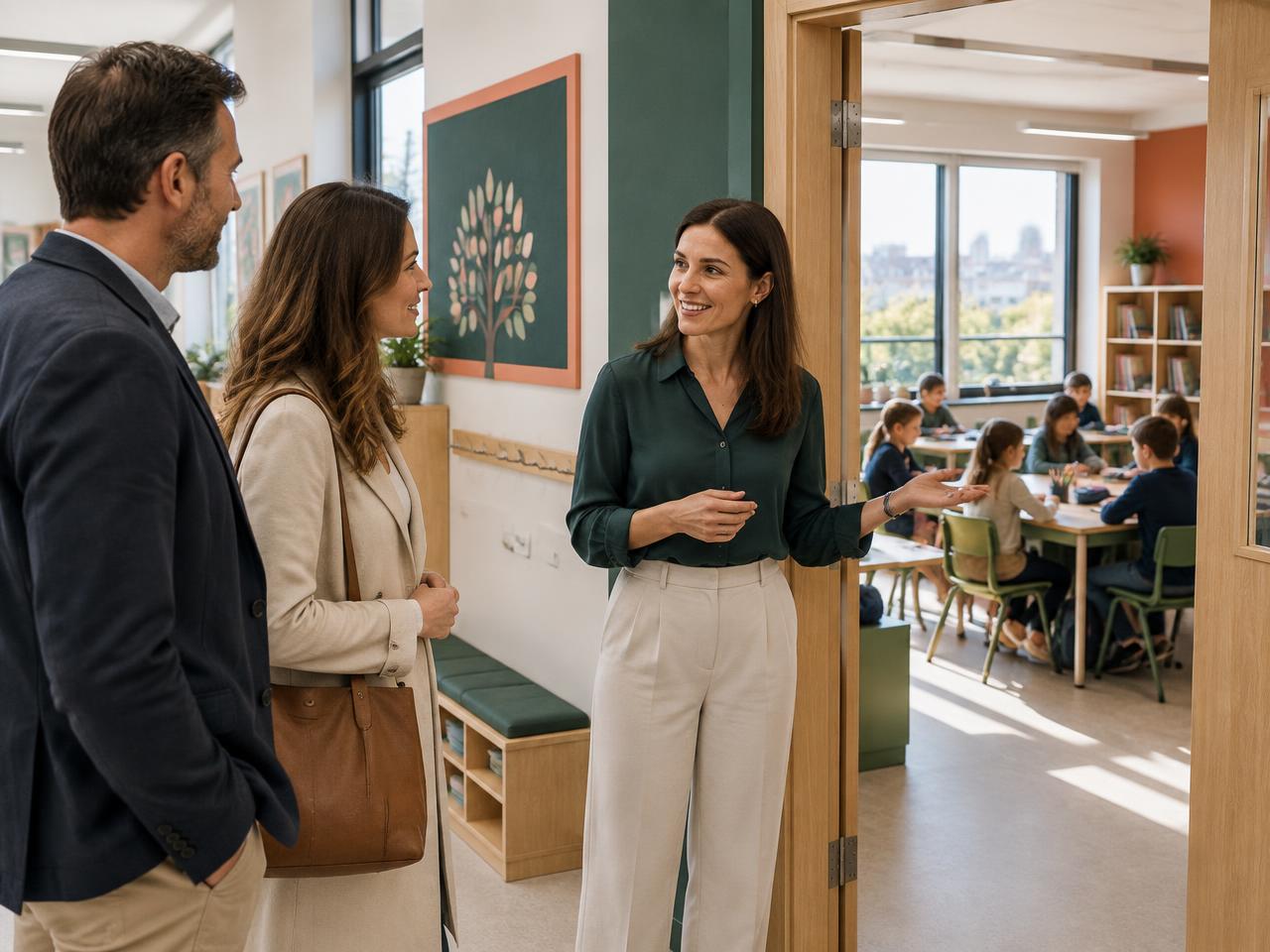
The first day of school is not just a date on the calendar. It is the beginning of habits the child carries for years: how they listen, how they work, how they talk to adults, how they relate to obligations and to others. That is why a private primary school in Belgrade should not be chosen based on attractive premises, promises of extra activities, or a convenient address. A parent is choosing an institution to which they entrust part of their child's upbringing.
A good school does not try to replace the family. It confirms the family's values through daily order, clear demands, and a consistent attitude toward work. When the family and the school agree on basic principles - respect, responsibility, decency, and perseverance - the child gets a stable framework in which they can calmly progress.
A private primary school in Belgrade is not just a choice of program
The national curriculum is the foundation of schooling and an important part of the child's educational continuity. Still, parents rightly look beyond the list of subjects. The difference between schools is often seen in how classes are organized, how well the teacher knows the student, how progress is monitored, and what happens when a child runs into difficulty.
Private education makes sense when it provides more attention, not just more content. A child does not progress because their day is filled up. They progress when they know what is expected of them, when they receive timely feedback, and when they learn to complete a task thoroughly. A school that keeps lowering its standards to maintain an appearance of satisfaction does the student no favors. Support and rigor must go together.
The question of language deserves special attention. In primary school a child acquires not just facts, but the ability to think, speak, and write clearly. Cultivating the Serbian language, the Cyrillic script, literature, history, and geography is not a closing-off from the world. On the contrary, a child who understands their own language, origin, and cultural context has a firmer foundation for understanding other people, other cultures, and contemporary challenges.
Small classes change the quality of work
In a class with fewer students, the teacher has the opportunity to notice what easily goes unnoticed in a large group: uncertainty in reading, carelessness in calculation, withdrawal from conversation, lack of work habits, or talent that needs extra encouragement. This is not a privilege without purpose, but a precondition for more responsible education.
Individual monitoring, however, does not mean that a child only does what is easy or pleasant for them. Its purpose is to find the right level of demand for each student. Some need extra practice and a calmer pace, others need more complex tasks and greater responsibility. In both cases the goal is the same: independence built through work, not through constant adult help.
Parents should ask how the school reacts when a student is making less progress. Does the problem remain recorded only in a grade, or is a clear work plan made? Does the teacher talk to the family in time? Is the fulfillment of agreed steps tracked? Regular, substantive communication with parents prevents a small difficulty from growing into a long-term problem.
An all-day rhythm is part of upbringing
For families with a demanding work schedule, it is not enough for the school to provide lessons until noon. They need a reliable place where the child spends the day meaningfully, without drifting between classes, unorganized time, and excessive reliance on screens. All-day instruction is not extended after-school care with the occasional assignment thrown in. It is an organized school routine.
Such a day has its own order: lessons, time for independent work, rest, physical activity, meals, and conversation. When a child completes homework and obligations under professional supervision, the family home again becomes a place of conversation, rest, and family life, rather than a second shift of school. This does not relieve the parent of responsibility, but it allows them to fulfill it more meaningfully.
Four daily meals, when part of a carefully organized day, are not a minor item. Nutrition affects a student's attention, energy, and mood. The same applies to regular movement and time outdoors. A child who is hungry, tired, or has no chance to move around has a harder time maintaining concentration, regardless of the quality of the lesson content.
Still, the all-day model suits families who want a clear structure and accept that the school has a visible educational role. If a family wants a completely freely organized day without a firm rhythm, this approach may not be the right choice. It is good for a parent to recognize that difference before enrollment, not after the first few weeks of classes.
Safety is seen in everyday consistency
A safe school environment is not just about controlling entry into the building. It begins with the way adults talk to children, the rules that apply to everyone, and the school's readiness to react calmly but decisively. A student must know where the boundaries are, whom they can turn to, and what is expected of them in the classroom, the hallway, the schoolyard, and digital communication.
Discipline is not the opposite of warmth. On the contrary, clear rules give children a sense of security because they do not have to test the limits every day. A fair consequence for an unfulfilled obligation, respect for time, orderliness of materials, and polite address are not trivial matters. They are everyday exercises in character.
It is important to distinguish strictness from humiliation. A serious school does not build authority by shouting or label a child for a mistake. It demands responsibility, explains consequences, and gives the chance to correct the mistake. The goal is not obedience without thought, but the development of an inner sense of duty.
What a parent should check before enrollment
A conversation with the school should be precise. General promises about an individual approach, creativity, and modern teaching are not enough unless a clear system stands behind them. A parent has the right to know what an ordinary school day looks like, not just a ceremonial program or an open class.
It is useful to check four questions: how independent work is organized, how academic and educational progress is monitored, what communication with parents looks like, and who takes responsibility when a child has a difficulty. The answers should be concrete. Precision on these questions says a lot about the culture of the institution.
The school's attitude toward knowledge should also be examined. Is the student expected to produce neat work and serious preparation? Is reading, good expression, and respect for the mother tongue nurtured? Do project work and workshops have educational meaning, or do they serve only as attractive decoration? A modern method is worthwhile when it deepens knowledge, not when it replaces the foundations.
The Private Primary School "Mihajlo Pupin" starts precisely from the position that knowledge and upbringing cannot be separated. An expanded national curriculum, work in smaller classes, all-day organization, and the cultivation of cultural identity form a system in which the child receives both support and the obligation to grow.
A standard that lasts longer than the school year
The best choice of school is not measured only by grades at the end of the semester. Grades are important, but they are not the only proof of progress. It is equally important that the child can organize their materials and time, read an assignment through to the end, ask a question when they do not understand, accept correction, and respect the people around them.
Such habits are not formed in a single lesson or a single workshop. They form through repetition, consistent demands, and harmony between what the school says and what it does every day. That is why a parent is not just choosing a school for eight grades. They are choosing the foundations from which the child will later make more mature decisions - in learning, work, family, and society.
Virtue is knowledge accompanied by character. And the responsibility a child learns to carry today remains their strength long after any report card.